AI Is an Outside Context Problem
AI is an Outside Context Problem for the modern corporation. Culture and organisational structure, not technology, will decide who survives it.
 carlo kruger 11 JULY 2026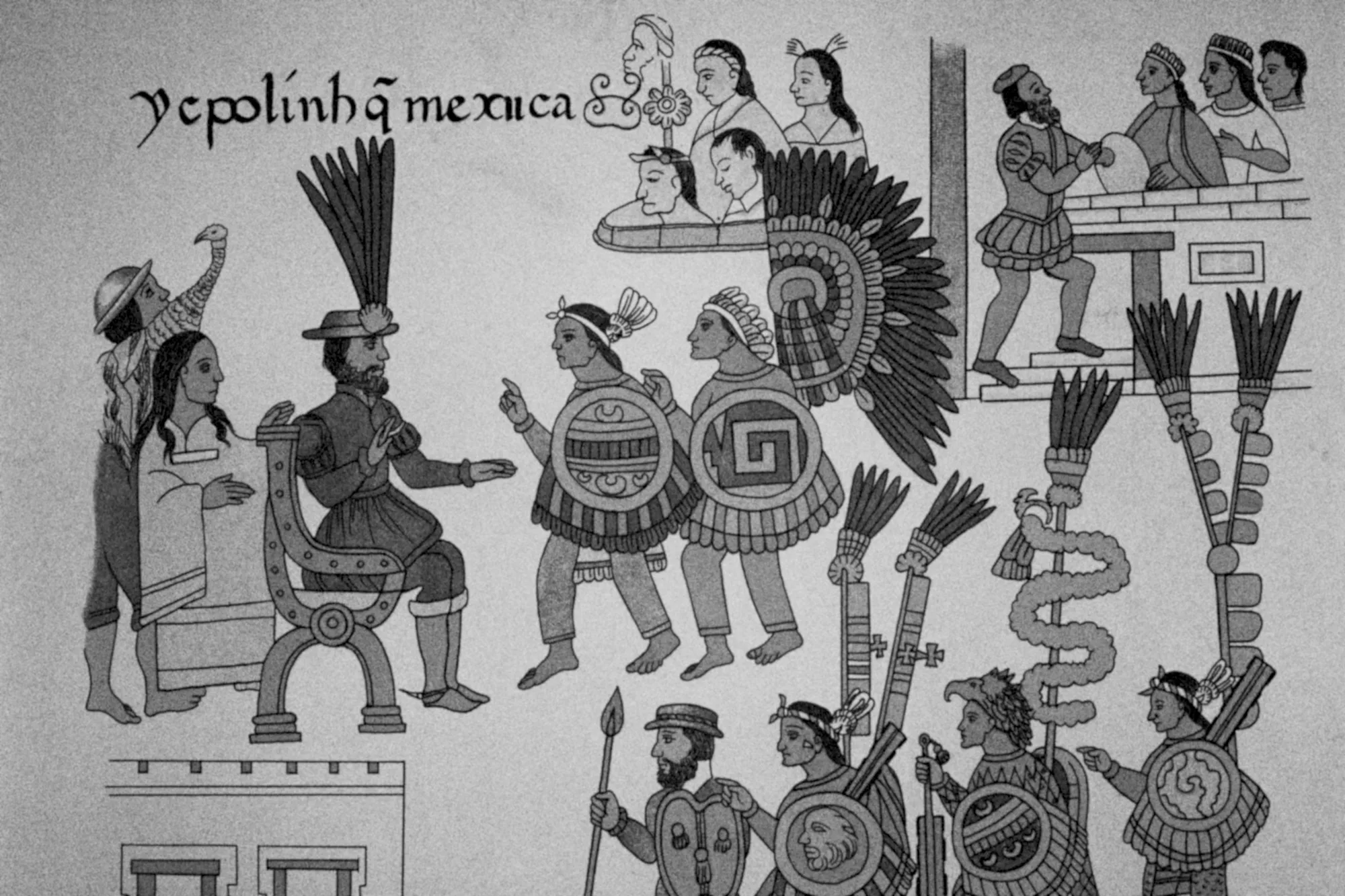
“An Outside Context Problem was the sort of thing most civilisations encountered just once, and which they tended to encounter rather in the same way a sentence encountered a full stop.
The usual example given to illustrate an Outside Context Problem was imagining you were a tribe on a largish, fertile island; you’d tamed the land, invented the wheel or writing or whatever, the neighbours were cooperative or enslaved but at any rate peaceful and you were busy raising temples to yourself with all the excess productive capacity you had, you were in a position of near-absolute power and control which your hallowed ancestors could hardly have dreamed of and the whole situation was just running along nicely like a canoe on wet grass …
when suddenly this bristling lump of iron appears sailless and trailing steam in the bay and these guys carrying long funny-looking sticks come ashore and announce you’ve just been discovered, you’re all subjects of the Emperor now, he’s keen on presents called tax and these bright-eyed holy men would like a word with your priests. That was an Outside Context Problem”
— Iain M. Banks, Excession
Start with a question that sounds simple: how far behind Europe were the Aztecs, technologically, when Cortés landed in 1519?
The intuitive answer is something like “thousands of years”, and the intuitive answer is wrong. The gap was not a gap at all. It was a jagged, uneven thing. In iron and steel metallurgy, yes, perhaps two thousand years — Mesoamerica had no ironworking. In gunpowder, maybe five hundred. In ocean-going ships, a thousand or more. But in writing, essentially no gap. In urban planning, none: Tenochtitlan in 1519 was one of the largest and most impressive cities on Earth, cleaner and better organised than anything the Spanish had left behind. In agriculture the Aztecs were arguably ahead — the chinampa system was more productive and more sustainable than European farming. They had sophisticated mathematics, astronomy, engineering, administration. They even knew about the wheel; it turns up in children’s toys. They simply had no draft animals to make it worth using, which is an ecological accident, not an intellectual failure.1
So the conquest is not the story of a primitive society meeting an advanced one. It is the story of a sophisticated society meeting something it had no category for.
Floating fortresses arriving from a direction that was supposed to contain only ocean. Animals no one had ever seen, carrying armoured men. Invisible disease that killed more people than any weapon. Strangers who did not play the role of enemy the way enemies were supposed to, but instead made alliances with your subject peoples and turned your own political structure against you.
The decisive factors were precisely the ones that arrived from outside every frame the Aztec world possessed. Their institutions were magnificent, and their institutions could not reason about what was happening to them. The danger was cognitive before it was material.
Banks gave this a name. An Outside Context Problem is not a superior weapon. It is an encounter with something so far outside your assumptions that your existing institutions do not know how to think about it. Most civilisations meet one exactly once.
I think the modern corporation is having its Cortés moment, and the ships on the horizon are AI.
The tool that isn’t a tool
The temptation is to file AI alongside previous waves of technology. Email. Cloud computing. Agile. Each was disruptive in its way, and each was eventually domesticated, because each fitted inside the existing organisational architecture. Departments, reporting lines, budgeting cycles, annual planning, management hierarchies — the furniture survived every one of those transitions.
So the corporate immune system does what it knows how to do: it treats AI as a procurement problem. Run a pilot. Form a committee. Appoint a Head of AI. Write a policy.
This is a category error, and it is exactly the error the OCP framing predicts. You reach for the institutions you have, and the institutions you have were built for a different context.
Because here is the thing: a corporation is a fossil record of old constraints. Its culture is not arbitrary. Every structure that looks like bureaucratic sediment was once a rational adaptation to a real limitation.
Layers of management exist because communication was slow. Functional silos exist because expertise was scarce and had to be pooled to be useful. Gatekeepers exist because information was expensive. Approval processes exist because mistakes were costly and hard to reverse. Meetings and committees exist because coordination was genuinely difficult.
The corporation is optimised around a set of assumptions so deep that nobody states them any more: human attention is scarce, expertise is scarce, coordination is expensive, knowledge moves slowly, and high-quality work requires large teams.
Large language models attack every one of those assumptions simultaneously.
Not one at a time, the way previous technologies did. All of them, at once. That is what makes this an outside context problem rather than an upgrade. When the constraints change, the adaptations to the old constraints do not become neutral. They become liabilities. The approval chain that once protected you from expensive mistakes now strangles a feedback loop that could run in minutes.2 The silo that once concentrated scarce expertise now walls off a system that has no concept of scarce expertise.
The bottleneck was never typing speed
An AI agent does not care about departmental boundaries. It does not know where Product ends and Engineering begins. It simply works on the problem. Meanwhile the organisation around it spends enormous energy maintaining exactly those boundaries — negotiating them, staffing them, holding ceremonies at the border crossings.
This is why so many companies are getting so little from the technology, and why I suspect the failure is cultural and structural rather than technical. Point AI at an organisation and it does not reveal that your people were slow at writing code or producing documents. It reveals that writing code and producing documents were never the bottleneck.
The bottleneck is organisational design: the cost of moving work across boundaries that exist because of constraints that no longer apply. Anyone who has spent time with flow-based thinking — Kanban, queueing, systems of work — will recognise the shape of this. Organisations mistake local optimisation for throughput. AI does not resolve that tension. It amplifies it, brutally, because it makes everything except the organisational friction nearly free.
What survives
A note of caution, because the strong version of this argument overreaches. Large companies do not exist only to coordinate labour. They provide capital. Brand and reputation. Distribution. Regulatory compliance. Risk absorption. Long-term coordination across massive physical systems. AI does not dissolve any of that overnight, and a one-person unicorn still cannot build a port or underwrite an insurance book.
What AI threatens is the middle: organisations whose primary function is coordinating knowledge workers. Consultancies. Software organisations. Agencies. The entire stratum of the economy whose product is, when you look closely, organised expertise — which is to say, the stratum many of us work in. That is where the assumptions are being attacked most directly, and that is where the full stop arrives first.
Culture as the moat
If the environment has genuinely shifted from complicated to complex — and an OCP is about as complex as environments get — then the right response is not to force the new reality through predefined process. It is to probe, sense, and respond. This is Cynefin’s territory. And here AI is a strange sort of ally, because the thing it is best at is exactly what an adaptive organisation needs: generating probes cheaply, simulating alternatives, compressing feedback loops from quarters to hours. The technology that breaks the old organisational style is the same technology that makes the new one affordable. The question is whether the culture can accept it.
Which points at the uncomfortable conclusion. The models are becoming a commodity, and they are commoditising fast — faster than cultures change, which is the slowest-moving thing in any organisation.
If AI ends up producing most routine knowledge work, then knowledge itself stops being the differentiator. What remains scarce are the organisational memes: the habits, norms, incentives and mental models that determine how effectively humans and machines actually collaborate.
Culture, not technology, becomes the long-term source of advantage — and most corporate cultures are adaptations to a world that has just ended.
That is what an Outside Context Problem looks like from the far side. The winners are not the ones who get the technology first. Everyone gets the technology. The winners are the ones capable of reorganising themselves around the new reality before the sentence reaches its full stop.
Tenochtitlan was one of the great cities of the world in 1519. Its institutions were sophisticated, its administration effective, its culture deep and confident. None of that was the problem. The problem was the context ending.
Footnotes
-
This is Jared Diamond’s argument in Guns, Germs, and Steel: the technological divergence between Eurasia and the Americas was driven by geography and ecology — domesticable draft animals, accessible metal ores, and a continental axis along which crops, animals and ideas could travel — not by any difference in the capabilities of the people. ↩
-
There is evidence for this in the DORA State of DevOps research, which found that heavyweight change approval processes — the classic Change Advisory Board — correlate with worse stability, not better, while automation provides more safety at vastly lower cost. The institutions built around the CAB remain too superstitious to accept the new paradigm. ↩